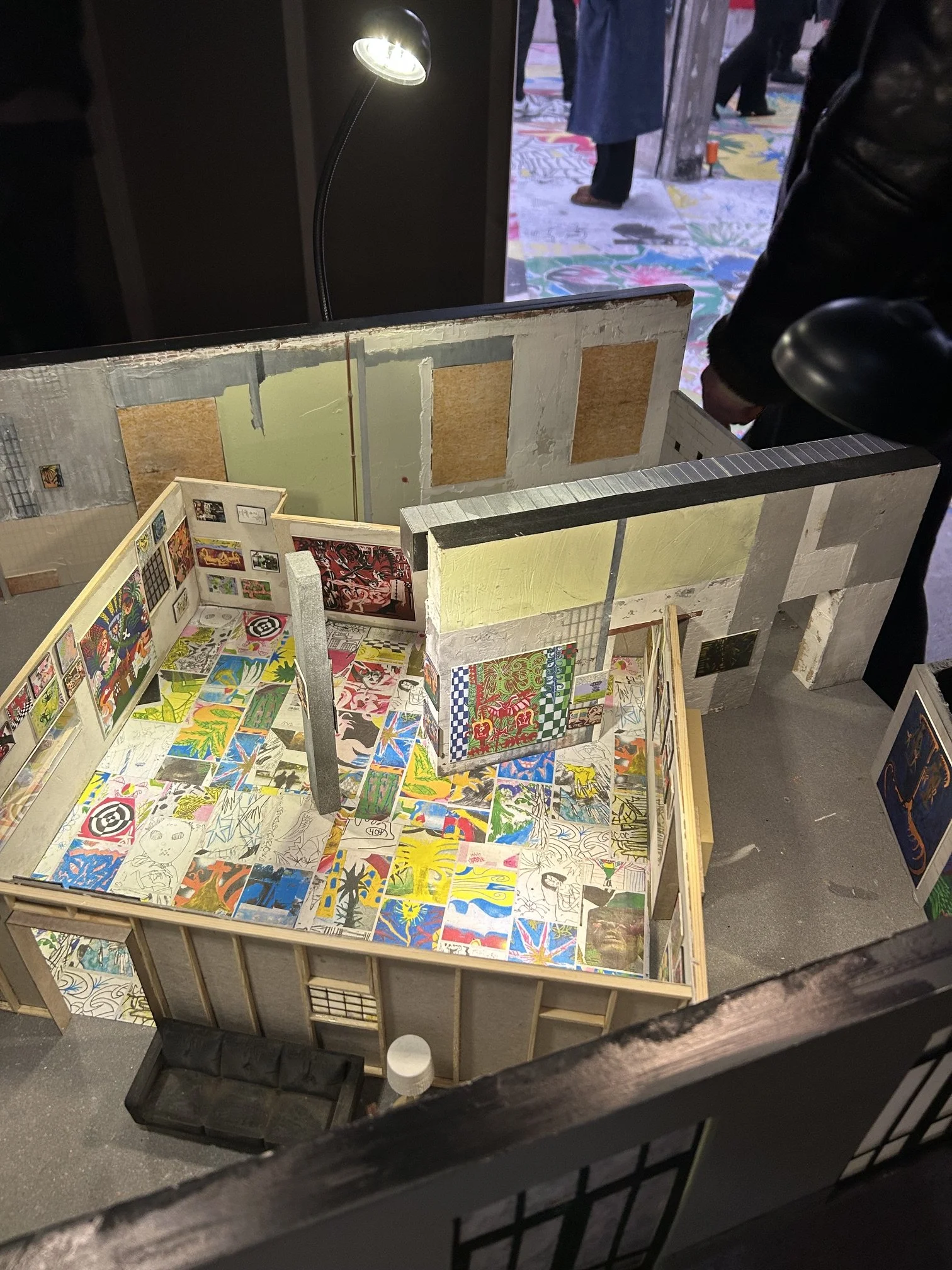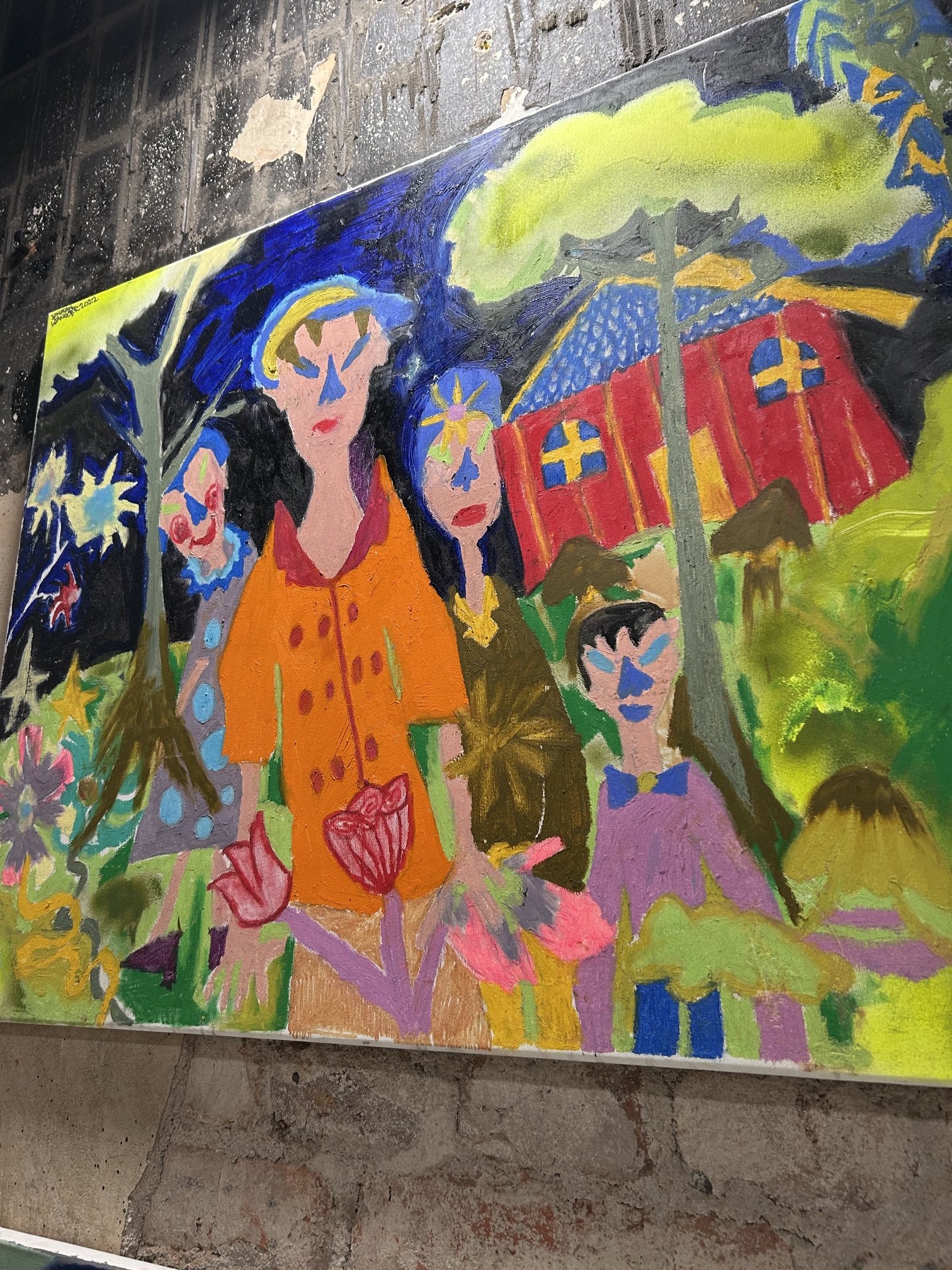
Swedish musician Yung Lean (Jonatan Leandoer Håstad) brought together a decade of his visual art for his first major exhibition Collected Works 2016–2026. The venue was the old Gasverket in Stockholm.
At Daybreak, we interpret the world and the market not only through the day language logic but also through the more creative lenses of night language: emotion, human meanings, and cultural phenomena. That’s why this exhibition, one of the most talked-about in the city, was an absolute must-see during our stop in Stockholm.
My visit happened to fall on the last day of the exhibition, so the queue was enormous. I’ll wrap up with a few words on why waiting in queue can be a blessing. But first, three brand lessons what an exhibition by a Swedish rapper can teach Finnish brands.
1. Create a world your audience wants to be a part of.
A miniature world reminiscent of Yung Lean had been created inside the old gas plant. The artworks, the space, and the atmosphere came together to form a unique whole. The art wasn’t just hung on the walls, visitors stepped into an entire creative world.
Brands have the same opportunity to create a world that comes alive and speaks to people across all channels. I’m not talking about a physical space; brand’s world is born from how the brand makes people feel, how it interacts with its community, and what kinds of experiences and content it invites people to experience and share. When this world is meaningful to its audience, new products, services, and collaborations can naturally be designed around it. In other words, growth.
The patterns from Yung Lean’s exhibition had been used to make items such as bed sheets. At least to this audience, the commercialization of art didn’t seem like a dirty word, but rather a fun opportunity to bring a piece of that fascinating world into their own bedrooms.
When people want to be part of your world, it opens up opportunities for growth beyond your current product categories.
2. Don’t become too pro.
Yung Lean has explained how years of touring and performing on stage have taught him exactly where to stand on stage and how a performance should sound. “Sometimes you become too pro,” he notes in an interview with Artsy. In his visual art, he’s drawn to the freedom and the instinctive approach allowed to amateurs. Imperfections, playfulness, and an unpolished touch are all allowed to show. He says he follows his instincts without always knowing in advance where they’ll lead. And that’s why, in art, the end result can be more interesting than anything he would ever have dared to aim for based on past experience.
Professionalism honed to perfection can, even for brands, turn into overconfidence and a tendency to repeat what experience has shown to be effective. As we tend to think we already know what customers want, what works, and what we definitely shouldn’t even try. When brands and their creators dare to retain the curious mind of a beginner and the freedom of an amateur, they dare to ask silly questions, be surprised, and get excited even by things for which there is not yet a ready-made justification or an endless amount of data.
How much interesting potential brands miss out on, and how many new opportunities they fail to explore if we believe we already know the answer in advance?
3. Recognizability can hold more variation than we think.
Materials, bold colors, sizes, and styles. Sculptures, videos, paintings, and site-specific works. The range of expression in the exhibition was limitless. Yet, taken as a whole, the artist’s hand was visible and recognizable.
Brands, too, should trust that a strong core identity can certainly support a variety of implementations and experiments that are in tune with the shifting market. It’s not worth missing interesting openings just because brand guidelines have stifled them.
In a constantly changing market, a brand strategy should give the brand the space to evolve alongside its audience and cultural trends. Only this way can a brand tap into new areas of growth and make unexpected moves.
A strong brand is also recognized when it does something unexpected.
And then there was that queue.
You can spend an hour-long wait getting annoyed. Or you can spend it observing people and what’s going on around you. It was delightful to see how art, and the musician’s bold pushing of the boundaries of artistic forma, had resonated with youth and young adults. They wanted to come and experience the exhibition live, and were willing to go to some trouble to make it happen.
They brought along takeout coffee and thermoses of tea. While standing in line, they caught up with the people around them, asked about their expectations for the show, and talked about Yung Lean’s music and the unconventional choreography in his music videos. No one complained, and the Sunday vibe was as laid-back as it gets in Stockholm. So the wait definitely felt like a shared experience and a shared world, with the exhibition itself serving as the cherry on top.